The Door Left Ajar: What Thriller Covers Are Really Saying When They Point at You
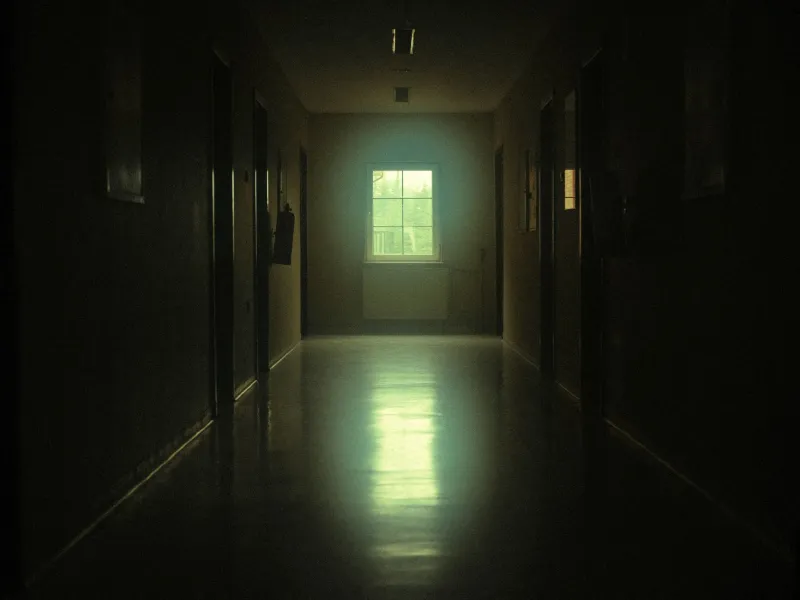
Walk the aisles of any bookstore from Portland to Providence and you will notice something peculiar about the thriller table: nobody on the covers is looking at you, and yet every one of them seems to be addressing you directly. A small silhouette crosses a rain-slicked street. A child's swing moves in an otherwise still yard. A door stands open by exactly the width of a question. None of these images contains a threat, strictly speaking. All of them contain an invitation.
American publishing has refined this visual language over decades, and its central trick is remarkably consistent: the cover does not depict danger. It depicts absence — and asks the viewer to supply the rest.
The Grammar of the Empty Frame
Cover designers talk about "negative space" the way novelists talk about subtext. The lone figure walking away, shot from behind, is perhaps the genre's most durable construction, and its function is precise. By withholding the face, the artist denies the viewer a character to observe and instead offers a vacancy to occupy. You cannot study that person's expression, so your mind begins wearing the coat instead.
"The moment you hide the face, you hand the body over," one veteran art director told us, describing the brief she received for a recent domestic suspense title. The publisher's instruction was a single sentence: the reader should feel like the next name on a list.
That instruction is not metaphor. It is a market position. Second-person dread — the sensation that a book has been addressed to you specifically — has become one of the most reliable selling propositions in American suspense, and the jacket is where that proposition is first stated.
A Short Inventory of Summoning Symbols
Certain images recur with the regularity of a dialect, and each carries a distinct emotional invoice:
- The half-open door. An entry point shown mid-decision. The viewer stands where the intruder would, or where the victim failed to lock up.
- The empty swing, the abandoned bicycle. Childhood interrupted. These images weaponize nostalgia, suggesting that the safe America of memory has a gap in it.
- The house at the edge of the frame. Distance implies witness. Someone is watching that house — and the composition places the viewer behind their eyes.
- The single lit window. Night, isolation, and the suggestion that inside, someone does not yet know what is coming.
Notice what is missing from this inventory: weapons, blood, monsters. Overt menace is a courtesy the American thriller cover rarely extends, because overt menace lets the viewer off the hook. It is spectacle. Ambiguity is a mirror.
Why the American Market In Particular
Suspense jackets sold in the US tend toward a specific minimalism — flat fields of color, a solitary element, generous silence — that distinguishes them from the denser, more illustrative traditions common elsewhere. Several designers we spoke with traced this to retail practicality: thumbnail visibility on phones and webstores rewards bold, reducible imagery. But the aesthetic also serves a psychological one. A sparse cover is an unfinished sentence, and American readers, trained by decades of advertising to complete brand messages, complete it involuntarily.
There is also a cultural current worth naming. The United States has a long national appetite for stories in which ordinary settings curdle — the cul-de-sac, the road trip, the safe suburb. Cover art that isolates one familiar object against emptiness taps directly into that tradition. The horror is not the object; it is the ordinariness, suddenly unattended.
The Designer's Dilemma
Not every artist embraces the summons. Several designers described an ongoing tension between craft and complicity: the same techniques that make a jacket magnetic also, in their view, manipulate. One put it plainly — "We are not selling the book. We are selling the feeling of being watched, and the reader pays for the privilege."
Others are more pragmatic. The cover, they argue, is an honest handshake: the reader who buys a book because its empty road unsettled them is getting exactly the experience promised. The manipulation, if that is the word, is disclosed on the front.
Perhaps. But stand in a bookstore long enough and watch hands drift toward the same minimal jacket again and again, and it becomes difficult to call the transaction entirely voluntary. The best thriller covers do not shout danger. They murmur something quieter, something with a pronoun in it.
The countdown on our own homepage understands this. So does every jacket on the table by the register. The question these images ask is never what happens in this book? It is something closer to why do you keep looking? — and the honest answer, for most of us, is that we were looking before we knew we'd started.


