The Appointment You Didn't Make: Calendar Dread and the Art of the Deferred Threat
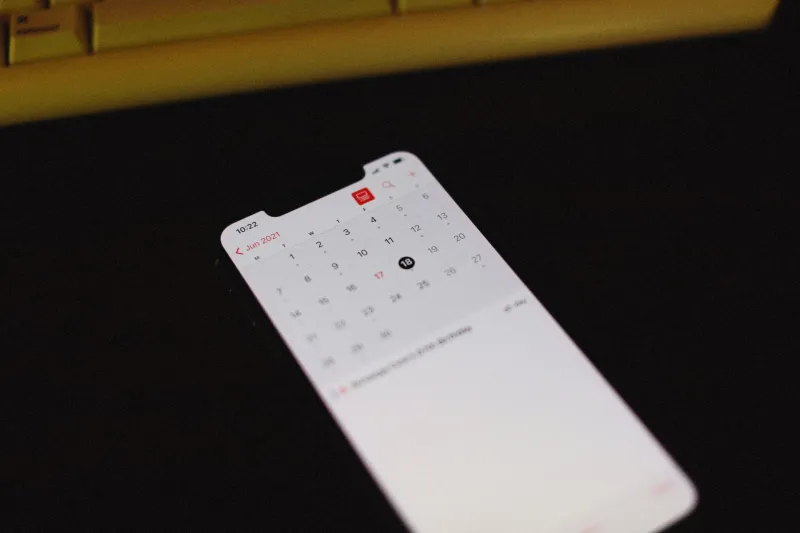
Of all the notifications that reach an American reader in a given day, the calendar alert is perhaps the most polite. It arrives without urgency, often with a soft chime and a tidy block of time. It does not demand an answer. It simply informs you that something will happen. And yet, in the hands of a suspense writer, that same small civic courtesy becomes one of the most efficient engines of dread available: a date on the horizon, a label with no explanation, and the quiet certainty that the future has already been booked.
The thriller has always understood that fear is not the same as alarm. Fear arrives with the immediate threat—the knock at the door, the shadow in the hallway, the phone that rings too late at night. Dread works differently. It lives in the interval before the event, when the mind has time to furnish the empty room. A scheduled reminder is almost pure interval. It turns ordinary time into a countdown, and it does so without raising its voice.
The Architecture of a Deferred Threat
A calendar invite is a promise of structure. It tells us that someone, somewhere, has decided what a particular hour will contain. That is reassuring in ordinary life and deeply unsettling in fiction. The reader knows that calendars are maintained by institutions—workplaces, schools, hospitals, courts, families—and institutions rarely schedule chaos. They schedule meetings. They schedule appointments. They schedule the moments when a person is expected to appear.
In recent American suspense fiction, the device appears in several recognizable forms: the deposition scheduled for a date after the protagonist expects to be dead; the recurring 3:00 a.m. reminder labeled only with an address; the shared calendar that quietly adds a dinner reservation at a restaurant that burned down years ago. None of these events is immediate. That is the point. The threat has been deferred, but it has also been formalized. Someone has taken the trouble to put it on the books.
The most effective versions of this trope exploit a simple asymmetry. The reader knows the date matters. The character may not. Or the character knows the date matters but cannot discover why. In either case, the calendar becomes a countdown device that is also a locked room. The event is visible, but its contents are not.
A Date With No Sender
An event you did not create is a peculiar kind of menace. It suggests that your time has been claimed by someone else, and that the claim was made with enough confidence to be entered into a system. The invitation may be perfectly ordinary in appearance—a lunch, a meeting, a service, a pickup—but the absence of a sender is the crack in the veneer. Who added this? When? And why does the calendar treat the matter as settled?
This is where the scheduled reminder outperforms the anonymous letter. A letter can be dismissed as a prank. A calendar entry is harder to ignore because it has been integrated into the machinery of daily life. It sits beside dentist appointments and work deadlines. It syncs across devices. It generates a reminder fifteen minutes before, as if the threat deserved the same courtesy as a conference call. The ordinariness is the threat. The system has accepted the event even if the protagonist has not.
Writers often heighten this effect by withholding detail. The event title might be a single surname, an address, a time, or a blank line. The location field might be empty. The guest list might include someone who cannot possibly attend. Each omission is a small invitation to the reader to complete the picture, and the picture is always worse than the one the author could supply outright.
The Recurrence Is the Menace
A single future date is suspenseful. A recurring reminder is a different order of dread. Recurrence implies intention. It implies that whoever set the schedule expects to be present—not once, but again and again. The weekly reminder becomes a ritual, and rituals in suspense fiction rarely remain benign.
The recurring alert also changes the rhythm of a narrative. It creates a drumbeat that the reader begins to anticipate, then dread. Monday at nine. Thursday at noon. Every night at 2:47. The exactness matters. A vague threat can be rationalized; a precise one cannot. The recurrence turns the calendar into a metronome, and the reader starts counting the beats between chapters.
There is a practical lesson here for authors. The scheduled reminder works best when it is woven into the texture of ordinary time rather than announced as a special event. A character who checks a calendar before bed, who silences a reminder during a funeral, who sees the same entry appear on a spouse's phone—these small integrations do more than a dramatic countdown clock ever could. The threat has entered the household budget of attention.
Why the Future Date Hits Harder
Psychologists have long noted that anticipatory anxiety can be more corrosive than acute fear. The body responds to a known future stressor by rehearsing it. The mind returns to the date, tests it, imagines variations, and slowly builds a private architecture of worry. A calendar reminder is an externalized version of that rehearsal. It does not merely announce the future; it keeps announcing it.
This is why an event scheduled for next month can feel more threatening than a confrontation happening now. The immediate threat demands action. The deferred threat demands waiting. Waiting is where suspense lives. The reader cannot resolve the danger, cannot fight it, and cannot look away from the date. The calendar has made patience into a form of peril.
How Authors Build Dread Through Scheduling
The craft notes are surprisingly concrete. Specificity is essential: a date, a time, a time zone, a name. Benign labels are useful because they withhold the menace while implying it. A reminder titled 'Follow-up' is more unsettling than one titled 'You Will Be Found.' Recurrence should be used sparingly but decisively. Shared calendars are especially fertile ground because they imply witnesses, obligations, and the possibility that someone else can see what you cannot. The smallest technical details—an outdated time zone, a duplicate entry, a reminder set for a date that has already passed—can do the work of a whole chapter of exposition.
The most sophisticated versions allow the calendar to reveal character. A protagonist who ignores the reminder is not merely careless; he is in denial. A character who deletes it is trying to unmake the future. A character who forwards it to someone else is passing the countdown along. In each case, the schedule becomes a moral instrument as well as a plot device.
The Clock in Your Pocket
What makes the scheduled reminder so durable as a suspense device is that it requires no supernatural machinery. It is already in the reader's pocket, already synced, already humming with the ordinary authority of a system that knows what comes next. The thriller only has to change the label.
At You Are Next, the countdown has already started. The date is set. The reminder is pending. And the most frightening thing about it is not the event itself, but the calm, helpful tone in which the calendar asks whether you would like to be notified fifteen minutes before.