Arithmetic of Dread: The Novel That Numbers Its Own Final Hours
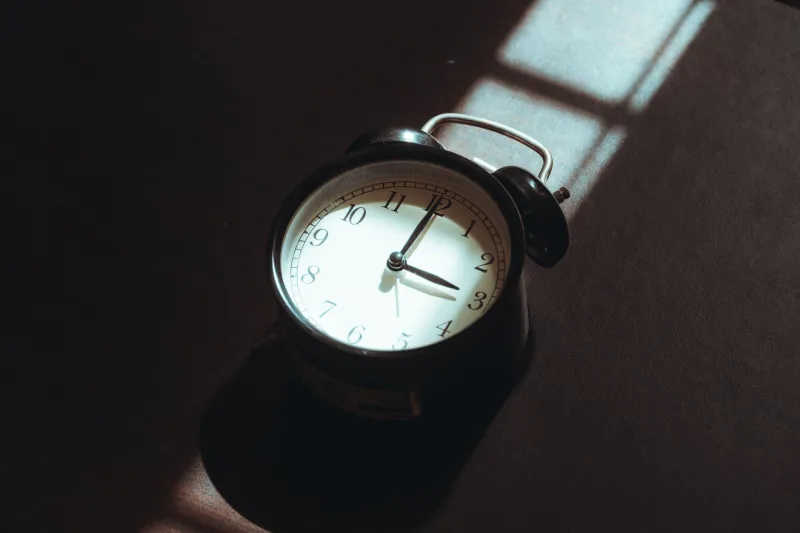
There is a particular unease that arrives before the first sentence of certain novels — the unease of glancing at the table of contents and finding it doesn't list places or names, but time. Chapter One: 11:59 PM. Chapter Two: 11:58 PM. The book has, in effect, told you its own lifespan before you've read a word. It has also told you something about yourself: that you will now be counting whether you want to or not.
The Contents Page as a Bomb Schematic
Suspense writers have always understood that the reader's imagination is the most efficient engine of fear available. What the numerically structured thriller does is conscript the reader's arithmetic as well. A chapter titled "Four Hours Remaining" is not a description. It is a contract. The author is promising that the clock is real, that it is running, and that every page you spend in a subplot is a page subtracted from someone's survival.
This is why the technique feels less like a gimmick than a physiological event. Cognitive research on time pressure suggests that explicit deadlines trigger anticipatory stress responses — elevated heart rate, shallow breathing, narrowed attention — even when the deadline is fictional. The reader knows the countdown is ink on paper. The body is less certain.
From the Coroner's Noon to the Chapter Heading
The convention has older roots than its modern typography suggests. Golden Age detective fiction loved a fixed appointment with death: the body will be discovered at noon, the will will be read at eight, the train will reach the viaduct at quarter past. These were promises of structure rather than threats — the reader of a 1930s mystery knew the noon corpse was a scheduling matter, almost a courtesy.
The transformation came when writers realized the clock could be turned on the reader. In thriller fiction, the numbered hour stopped being a landmark and became a meter running. Chapter headings that count downward convert the act of reading into an expenditure. You are not progressing through the story; you are spending time the characters need.
Typography as a Ticking Mechanism
Consider what the page itself does. A single-digit chapter number — "7" — carries a different weight than "XLVII." Modern countdown thrillers exploit this by keeping the numbers large, bold, sometimes isolated on their own page, so the reader turns past a numeral the way one glances at a dashboard. Designers of such books have described the chapter break as a reset of anxiety: every few pages, the reader is forced to re-register how little remains.
The craft trick is in the spacing. Compress the chapters and the countdown accelerates; the reader feels the tempo change in their hands. Stretch them, and each hour becomes a long, airless room. The typography is the metronome, and the reader's thumb on the page edge is the escapement.
Why the Mind Cannot Refuse the Count
The deeper psychology is that humans are poor at ignoring quantified scarcity. Tell a reader a character has three days to live and they will, at some level, be tracking the days — even when the text stops mentioning them. The countdown structure simply makes this involuntary accounting explicit. It removes the reader's ability to say, surely there's time.
It also manufactures a rare narrative honesty. A conventional thriller can cheat; the deadline that never quite arrives, the climax deferred for fifty pages. But a book that prints "2 Hours Remaining" on a chapter heading has staked its credibility. The reader holds the book slightly differently after that. The author has promised arithmetic, and arithmetic does not negotiate.
The Reader Who Finishes Early
Perhaps the strangest effect of the countdown novel is what it does to reading speed. Survey any book club that has taken one on and you'll hear the same confession: they read faster than usual, almost against their will, as though finishing before the fictional clock does will somehow spare them. The book converts leisure into urgency — a neat inversion of what reading is supposed to be.
Which may be the technique's true legacy. The countdown thriller doesn't ask the reader to imagine fear. It arranges the numbers so that fear does the imagining, one diminishing integer at a time. The clock on the wall was always the reader's own.