The One Who Knocked and Wasn't Heard: A Field Guide to Fiction's Doom-Messengers
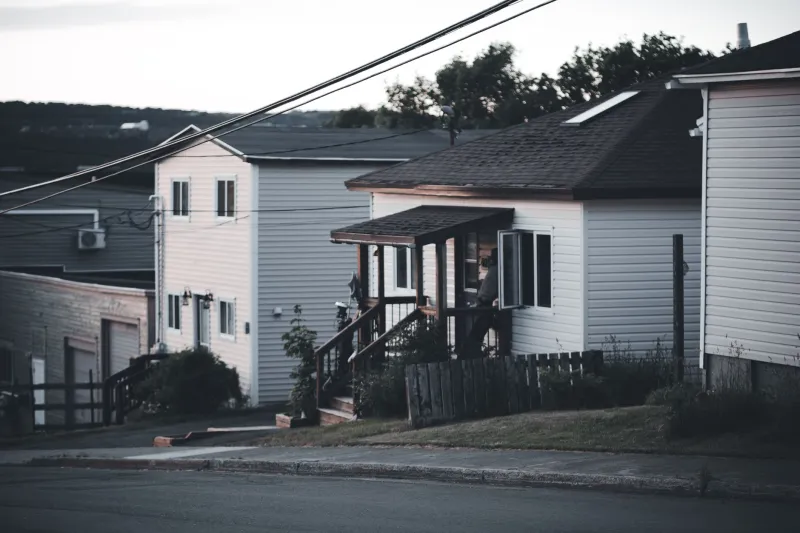
Somewhere in the opening act of nearly every American thriller, a warning is delivered. It is rarely loud. It arrives as a mumbled remark over a fence, a phone call cut short, a note slipped under a door by someone the protagonist has spent years avoiding eye contact with. And in almost every case, the warning fails. Not because it was wrong — it was usually dead accurate — but because the person delivering it lacked what the story calls credibility and what the rest of us call standing.
This figure deserves more attention than the genre gives her. The victim gets the eulogy. The killer gets the monologue. The detective gets the sequel. But the doom-messenger — the ignored prophet of the first hundred pages — is the load-bearing wall of the entire structure. Remove her, and the plot has no hinge. Remove her, and the reader never gets the exquisite, unbearable gift of hindsight: they knew, someone knew, and it didn't matter.
The Cassandra Clause
The archetype is ancient — the Greeks had Cassandra, cursed to prophesy truth and never be believed — but the American version carries a distinctly homegrown pathology. In the national imagination, the person who warns us is almost always slightly wrong in presentation even when perfectly right in substance. She talks to her mail. He keeps ledgers of comings and goings on the block. They were run out of the sheriff's department under circumstances never fully explained.
We are a culture that prizes self-reliance, and yet our fiction is saturated with a quieter anxiety: that our instincts are untrustworthy, that the person who felt something was off was dismissed because feeling isn't evidence. The doom-messenger exists to punish that dismissal. She is the embodiment of every gut check we overrode, every odd detail we filed away and forgot.
A Taxonomy of the Unheeded
Read enough of the genre and five distinct species emerge.
The Retired Professional. A former sheriff, a decommissioned FBI man, a nurse who worked the night shift at St. somewhere. His warnings carry institutional weight but institutional damage — he's been saying the same thing for years, and the repetition has cost him his audience. His tragedy is that accuracy decays into noise.
** The Neighborhood Eccentric.** She feeds strays, talks to no one, notices everything. Her marginalization is precisely what makes her reliable; the story has no reason to lie through a character nobody listens to. When she finally speaks, the reader leans in.
The Kid on the Bike. Children in thrillers function as truth-detectors uncorrupted by social politeness. The kid saw the car. The kid heard the argument. Adults nod, pat the helmet, and go back to underestimating everyone under four feet tall.
The Outsider by Geography. The newcomer, the seasonal renter, the delivery driver who covers three counties. He sees the town with fresh eyes precisely because he doesn't belong to it, and his observations are dismissed because he doesn't belong to it.
The Former Insider. The ex-wife, the estranged brother, the partner who left the firm. She knows the truth but has forfeited the right to be heard by association. Her warnings read as bitterness; they are, in fact, testimony.
Why We Keep Not Listening
The psychology here is uncomfortably familiar. Researchers who study disaster response have long documented the way communities rationalize away early warnings — the levee that holds, the fire that's always burned somewhere else. Fiction simply compresses the timeline. The thriller's ignored prophet lets us rehearse the moment of dismissal in miniature, over and over, until we ask the question the genre is really posing: how many times have you been the neighbor who knocked?
The best modern practitioners understand that the doom-messenger is a mirror. When the truth finally surfaces in chapter thirty, the protagonist's failure to listen becomes the reader's failure too. We were there on page twelve. We heard the crack in the voice. We turned the page anyway.
That is the quiet cruelty of the form. The warning was never meant to save the character. It was meant to implicate us all — and to make certain that the next time someone says something's not right on that street, we at least pause at the door before we close it.