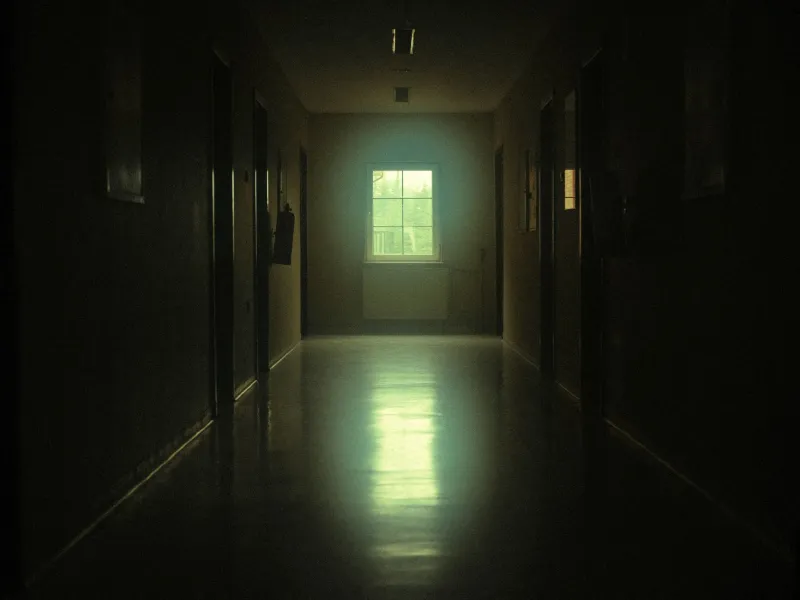
The Van Turns Onto Your Street: Delivery Tracking and the New Suspense of Arrival
The countdown has already started, though it rarely announces itself as such. It arrives as a push notification: Your package is out for delivery. Then a window: four hours, sometimes six. Then a map with a small icon moving through streets that look like yours but are not quite yours. In contemporary American suspense, this ordinary sequence has become a new kind of clock. The delivery window is not a deadline in the legal sense. It is a deadline in the narrative sense—an interval in which something is expected, and expectation is where dread lives.
A Countdown Written in Scan Events
Traditional thriller clocks are visible: a bomb timer, a court docket, a train schedule, a ransom call due by midnight. The delivery countdown is quieter and more administrative. It is written in scan events—arrived at facility, departed facility, in transit to next facility—and in the promise of a final status: arriving today. Each update functions as a small chapter break. The reader, like the character, is invited to refresh the page. The page does not always refresh with reassurance.
What makes the device useful to novelists is its absence of numerals. A bomb timer counts down in seconds. A delivery window counts down in ambiguity. The reader supplies the interval between updates, and the imagination fills that interval with possibilities. A package that stops moving is often more frightening than one that moves quickly. The silence between scans becomes a narrative silence. In a genre built on anticipation, the tracking page is a machine for producing exactly that.
The Porch as Proscenium
The doorstep has long been a stage in American suspense. It is the threshold where public and private meet, where a stranger can become a caller, where a knock can arrive before a face. Delivery tracking sends a character toward that threshold before anything has happened. It makes the character wait inside their own home, aware that the home is about to be approached. The porch camera and the video doorbell only formalize what the thriller has always understood: arrival is a scene.
A porch camera frames a rectangle of the outside world and turns it into evidence. A delivery notification gives that rectangle a time stamp. Together, they create a closed circuit of anticipation. The character can watch the street, check the app, and listen for the doorbell, but none of these actions resolves the suspense. They only repeat it. The delivery window keeps the character in a posture of readiness—and readiness, in a thriller, is another word for vulnerability.
Why Logistics Feels Personal
A shipping alert is addressed to you. It contains your address, perhaps your name, and the language of possession: your package, your delivery, your estimated arrival. The thriller has long used letters, telegrams, and messengers to make dread personal. The new twist is automation. There is no visible sender, no human hand at the other end of the notification. The system speaks in the second person, and the second person follows the reader home.
Authors can make this mundane infrastructure ominous by making it seem to know more than it should. A delivery-window text arrives at an odd hour. A tracking page shows a stop after the package was already marked delivered. A driver reports handed to resident when no one was home. These details are not supernatural. They are administrative. That is precisely why they work. The modern thriller often finds its menace not in the impossible but in the procedural—in the systems that claim to account for our movements and then fail, quietly, in ways that feel directed at us.
The Doorbell as Narrative Trigger
The doorbell is a promise of arrival, and in suspense it is often a promise deferred. The delivery countdown trains the reader to wait for that sound. A knock becomes a deadline. A chime becomes a cue. The package itself can be left, stolen, returned, or used as a prop, but its narrative function is less important than the wait it creates. The delivery is not the threat. The waiting is.
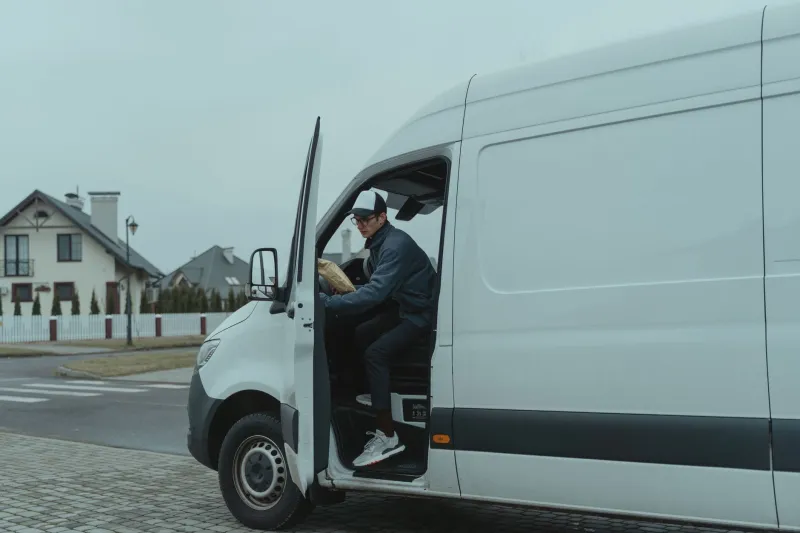
This is especially true in a culture already alert to porch piracy. The package on the step is vulnerable before it is even touched. The notification says arriving today, and the reader understands that arrival is not the same as safety. In fiction, the delivery window can be stretched until the ordinary sound of a truck door becomes a kind of verdict. The van turns onto the street. The reader leans forward. Nothing has happened yet, which is exactly the point.
A Culture Already Trained to Wait
Americans have been conditioned by e-commerce to treat arrival as a daily event. The doorbell is a domestic sound, but it is also an interruptive one. Delivery windows have become a shared ritual: the morning check, the afternoon refresh, the evening excuse to look out the window. Thrillers do not invent this anxiety. They formalize it. A novel can exploit the fact that readers have already checked a tracking page that morning, already seen a map, already waited for a van.
The genre's newest countdown is not on a bomb. It is on a dashboard. The delivery window is a deadline made of logistics, and its power lies in its familiarity. It is the kind of clock that does not look like a clock until someone is waiting for it. For readers of suspense, the lesson is that dread can be manufactured from anything—even a text that says arriving today. The countdown has already started. The van is turning onto your street.