A Chime Meant for Everyone, Addressed to You: The New Jump Scare in American Suspense
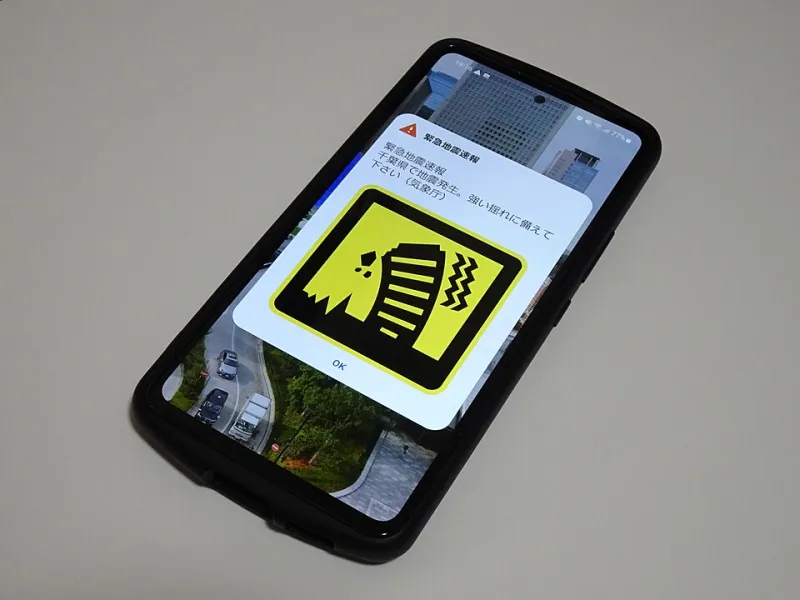
Photo: RuinDig/Yuki Uchida, CC BY 4.0, via Wikimedia Commons
The modern American thriller has a new sound effect, and it does not belong to the author. It belongs to FEMA. A sharp, repeating chime, a vibration that seems to travel through the table, a banner that interrupts whatever the reader was doing — these are the signatures of the Wireless Emergency Alert system, and novelists have begun to use them with the precision of a stagehand dropping a sandbag. The result is a jump scare that arrives not from the page but from the reader's pocket, and it carries an authority that no invented ringtone can match.
The Sound of Authority
Most fictional frights depend on suspension of disbelief. The haunted house, the stranger on the stairs, the letter with no return address — each asks the reader to accept a set of rules. An emergency alert asks for nothing. It is already real. It arrives through a mandatory broadcast system designed to reach nearly every cell phone in a given area, and its purpose is not to entertain but to warn. That distinction gives suspense writers a rare advantage: the reader has likely received such an alert before, perhaps for a tornado warning, a missing child, or a presidential message. The body remembers the reflex — the reach for the phone, the brief spike of adrenaline, the scan for a county name.
When a novel reproduces that chime in text, it borrows the reflex. The author does not need to explain why the character's pulse quickens. The reader's pulse has already done the work.
A Countdown in Three Tones
The alert's structure is itself a kind of clock. First comes the sound, insistent and unmusical. Then the banner, limited in characters and therefore ruthless in its priorities. Then the instruction — shelter, avoid, call, watch. Suspense novels have learned to stretch these three beats across a chapter or a night, using each alert as a tick rather than a single shock. A weather warning arrives early, almost mundane. An AMBER alert follows, introducing a child and a vehicle and a direction of travel. Then a presidential-level notification, rare in life but irresistible in fiction, arrives with the implication that the machinery of the country has turned its attention to the plot.
The effect is a countdown that feels official. The reader is not waiting for a clock to strike midnight; the reader is waiting for the next mandatory interruption. Each alert narrows the field. Each one makes the fictional world smaller and the protagonist's options fewer. By the time a novel reaches its final act, the alerts may be arriving in clusters, their tones overlapping, their instructions contradictory. The countdown has already started, and the author has deputized the federal government to keep time.
When the Alert Says Your Name
The most unnerving variation on this device is also the simplest: the fictional alert addresses the reader directly. Not a county. Not a description. A name. Perhaps the protagonist's name, perhaps the reader's own. The shift breaks the contract of the emergency broadcast, which is meant to be collective and impersonal. A warning for everyone is a public service. A warning for you is a threat.
This is where the thriller's long tradition of personal menace meets the architecture of modern notification systems. The alert is not a letter slipped under a door; it is a message that arrives with the weight of infrastructure behind it. It suggests that the sender has access to the same channels as the government, or worse, that the government has become the sender. In either case, the reader's phone — the object sitting on the nightstand, the device holding family photos and banking apps — is reclassified as a plot device. It is no longer a window to the world. It is a loudspeaker for the antagonist.
The Reader as Recipient
Suspense fiction has always sought to make the reader complicit. Second-person narration, unreliable documents, and stories that end with an unanswered knock all work by collapsing the distance between page and person. The emergency alert does this with unusual efficiency because it requires no formal experiment. The reader already knows the sound. The reader already knows the feeling of being addressed by a system that does not ask permission.
That is why the device is likely to persist. It is cheap, recognizable, and deeply American in its combination of public warning and private dread. It turns the ordinary phone into a character, and it turns the reader into a recipient. The next time the chime goes off in a novel, the reader may pause before turning the page. The next time it goes off in life, the reader may pause before looking at the screen. That pause is the point. In the grammar of suspense, a mandatory alert is not a test. It is a promise that someone, somewhere, has decided you need to know something now.