The Reader's Paradox: Why a Ticking Clock Hijacks the Mind
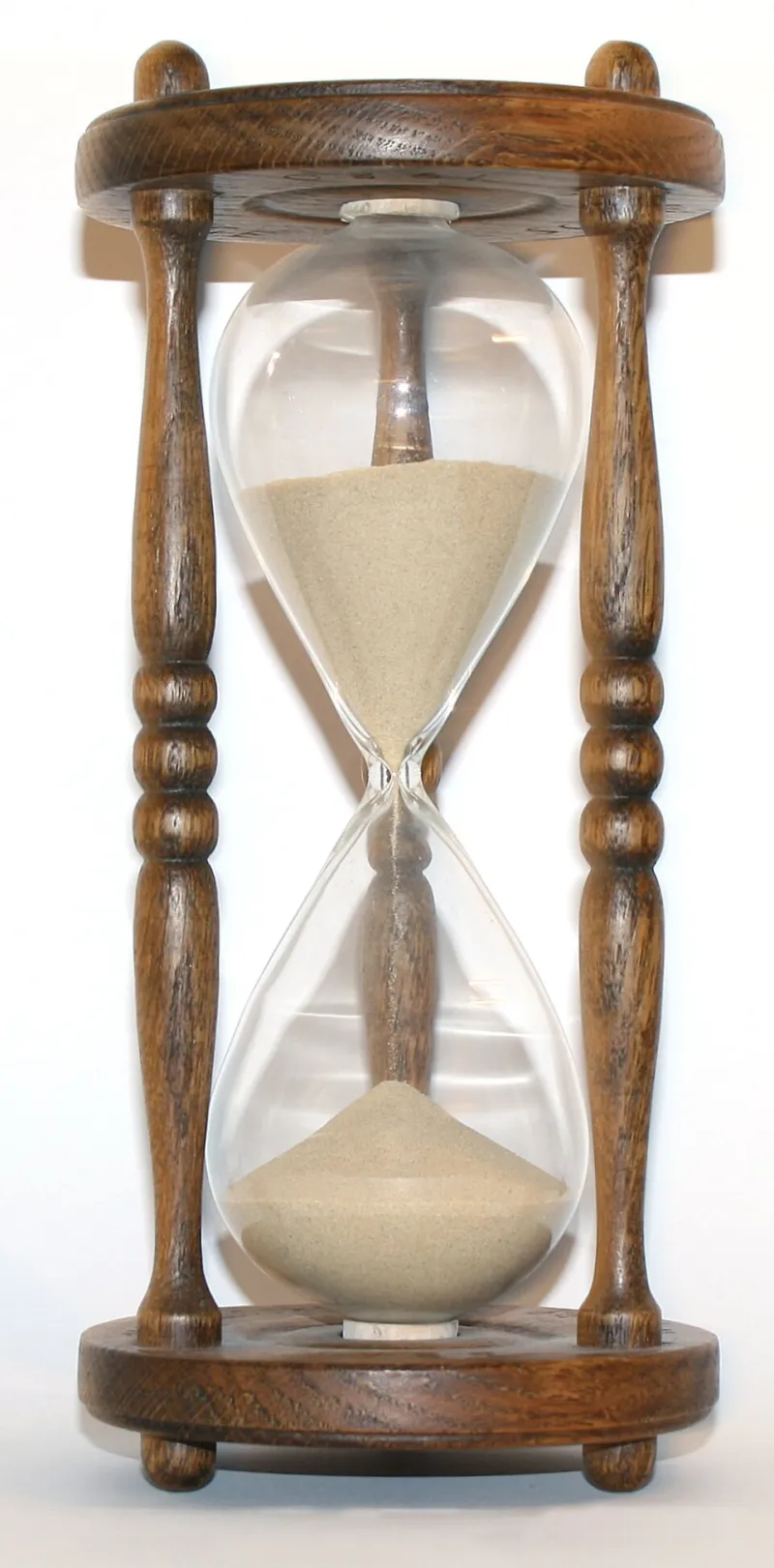
Photo: User:S Sepp, CC BY-SA 3.0, via Wikimedia Commons
Ask a reader to describe their favorite thriller and you will rarely hear about the villain's motives or the elegance of the prose. You will hear about the night they could not put the book down. That compulsion—the physiological inability to close the cover—has a name in the research literature, and it has a favorite trigger: the deadline.
The Zeigarnik Effect: Unfinished Business Refuses to Sleep
In the 1920s, psychologist Bluma Zeigarnik observed that people remember interrupted tasks far better than completed ones. An unfinished task creates a low-grade cognitive itch that the mind keeps scratching. Thriller writers exploit this mercilessly. A countdown is, structurally, a task interrupted every few pages—paused at the worst possible moment, resumed with less time remaining. The reader's brain, holding an open loop, demands resolution. Closing the book does not close the loop.
Uncertainty Is More Arousing Than Certainty
Studies of anticipatory emotion consistently show that uncertainty amplifies physiological arousal. In one frequently cited line of research, participants awaiting an uncertain outcome showed stronger stress responses than those awaiting a certain negative one. In plain terms: not knowing is worse than knowing, and the body treats it that way.
A ticking clock manufactures this state deliberately. The endpoint is fixed—midnight, zero hour, the launch window—and the outcome remains genuinely in doubt. Suspense lives in the gap between those two facts. Novelists who narrow that gap too early lose the reader; those who hold it open to the final page are remembered for years.
The Clock as a Character
Screenwriting teachers sometimes say the ticking clock is a character. Psychologically, the claim holds up. A deadline imposes a rhythm on the narrative, and rhythm is processed pre-consciously—the reader's pulse entrains to the pacing whether they wish it or not. Short chapters, alternating viewpoints, timestamps at each section break: these are not stylistic flourishes but tempo controls, tuning the reader's nervous system like an instrument.
This is also why countdown thrillers translate so well to American audiences raised on broadcast television and sports play clocks. The cultural training is already complete. The novelist merely switches on the timer.
The Comfort of Manufactured Dread
There is a final, slightly paradoxical element. Readers seek out deadline fiction because it delivers genuine fear inside a safe container. The clock is running, but the reader can always step off the ride. Researchers who study recreational fear describe this as a controlled dose of threat—an adrenaline experience with an exit. The countdown format is the purest expression of that bargain: maximum urgency, zero actual risk.
A Reading List for the Deadline-Obsessed
For readers who want to feel the mechanism working at full power, consider these countdown-style thrillers:
- "The Da Vinci Code" by Dan Brown — a single night in Paris and London, a puzzle box with a fuse.
- "I Am Pilgrim" by Terry Hayes — an investigation racing a bioterrorism timeline.
- "The Silent Patient" by Alex Michaelides — a psychological countdown to a revelation the reader can feel approaching.
- "Along Came a Spider" by James Patterson — an abduction case with a clock that never stops.
- "The Chain" by Adrian McKinty — a premise that weaponizes deadlines against the reader directly.
Each demonstrates the same principle from a different angle: fix an endpoint, obscure the outcome, and control the tempo. Do those three things and the reader's own biology does the rest.
The countdown has already started. It started the moment you clicked. The research says you were never going to look away.